
TL;DR:
- Consistent social media presence is essential for bookings, brand growth, and visibility in 2026.
- Effective strategies include platform selection, engaging content, community interactions, and paid ads.
- Showing up regularly builds trust, generates inquiries, and converts followers into paying guests.
Every day, diners in your area open Instagram, scroll through Facebook, and browse TikTok looking for their next meal, celebration venue, or corporate event space. If your restaurant isn’t showing up where those decisions happen, you’re leaving real money on the table. Full service restaurants that stay quiet on social media consistently lose private event bookings and walk-in traffic to competitors who simply show up more often. This guide breaks down exactly what social media marketing is, why it matters in 2026, and how you can use it to fill tables, grow your brand, and turn your event spaces into revenue engines.
Table of Contents
- What is social media marketing and why does it matter for restaurants?
- The essential pillars of restaurant social media marketing
- How social media marketing drives diners and private bookings
- Best practices and common mistakes in restaurant social media marketing
- What most restaurant owners overlook about social media marketing
- How ION Hospitality can help your restaurant succeed on social media
- Frequently asked questions
Key Takeaways
| Point | Details |
|---|---|
| Definition tailored to restaurants | Social media marketing means attracting, engaging, and converting guests online using the platforms where they spend time. |
| Pillars for success | Choose the right platforms, create engaging content, talk with guests, and use ads strategically for growth. |
| Drives more bookings | Social media marketing can increase restaurant bookings and event inquiries by up to 31 percent. |
| Consistency is key | Regular engagement matters much more for most restaurants than hoping for a viral moment. |
| Avoid common mistakes | Skipping replies and inconsistent posting hurt your results more than you may realize. |
What is social media marketing and why does it matter for restaurants?
Now that we’ve set the stage, let’s get specific about what social media marketing means for your restaurant and why it matters more than ever.
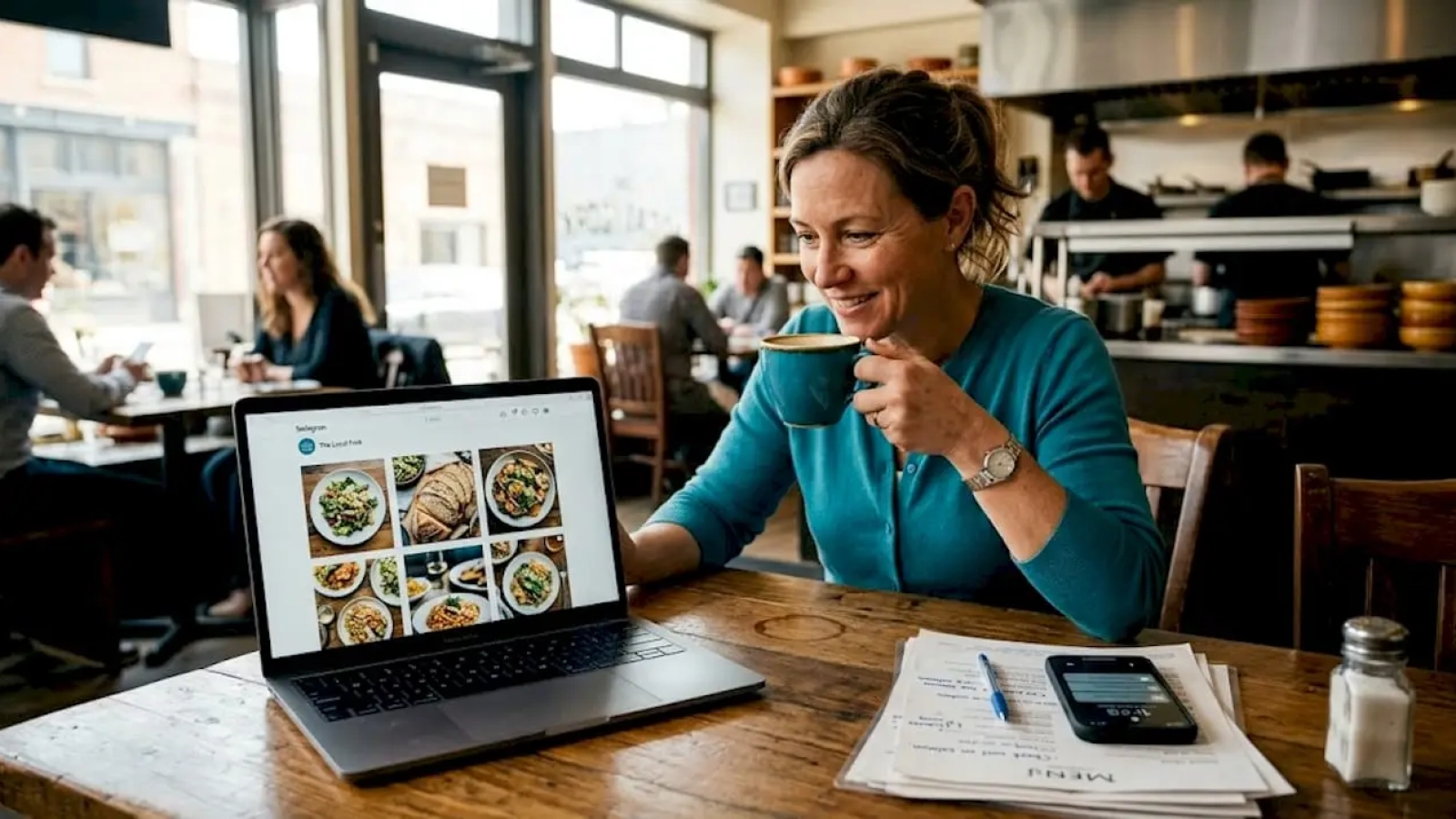
Social media marketing is the practice of using platforms like Instagram, Facebook, TikTok, and X (formerly Twitter) to promote your restaurant, connect with guests, and drive action. For restaurants, that action might be a reservation, a phone inquiry about a private dining room, or a direct message asking about your catering menu. It’s not just posting pretty food photos. It’s a deliberate strategy to build visibility, earn trust, and move people from their phones to your front door.
Here’s why diners use social media before they eat anywhere:
- 🔍 Discovery: A scroll-stopping reel of your signature dish lands on a stranger’s feed. That’s how they find you.
- ✅ Vetting: They check your profile, read comments, and look at recent posts to judge quality and vibe.
- 📩 Action: They DM you, click the link in your bio, or tag a friend to say “we need to go here.”
“Diners are making restaurant decisions on social media before they ever step inside. If you’re not part of that conversation, someone else is.”
This behavior is why your online presence for restaurants has become as important as your signage, your menu, and your word-of-mouth reputation. A strong social presence tells potential guests you’re active, proud of your food, and worth visiting.
The platforms you focus on matter, too. Instagram is the visual powerhouse for showcasing food, ambiance, and events. Facebook is essential for event promotion, group sharing, and reaching a slightly older demographic that books private events. TikTok is growing fast with younger audiences and is ideal for behind-the-scenes clips and trending content. X works best for real-time engagement and responding to local buzz.
The types of content that generate results for restaurants include:
- Menu features and limited-time dishes that create urgency
- Behind-the-scenes videos of your kitchen and team
- Private event showcases featuring setup, decor, and happy guests
- Holiday and seasonal promotions tied to booking calls to action
- User-generated content (UGC) where guests post their own photos and tag you
Each of these content types builds a different layer of connection with potential guests. Menu posts spark cravings. Behind-the-scenes content builds trust and loyalty. Private event content directly generates inquiries from people planning celebrations, corporate dinners, and rehearsal meals.
The essential pillars of restaurant social media marketing
With a clear definition in place, let’s dive deeper into what makes restaurant social media marketing truly effective.
Every successful restaurant social media strategy rests on four core pillars. Miss one, and your results suffer. Nail all four, and you’ll see consistent growth in traffic, engagement, and bookings.
1. Platform selection
Choose platforms based on where your target audience actually spends time. If you’re a fine dining restaurant targeting corporate clients and families celebrating milestones, Facebook and Instagram are non-negotiable. If you want to reach a younger crowd for happy hour or late-night dining, TikTok should be part of your mix. Don’t spread yourself too thin trying to be everywhere at once.
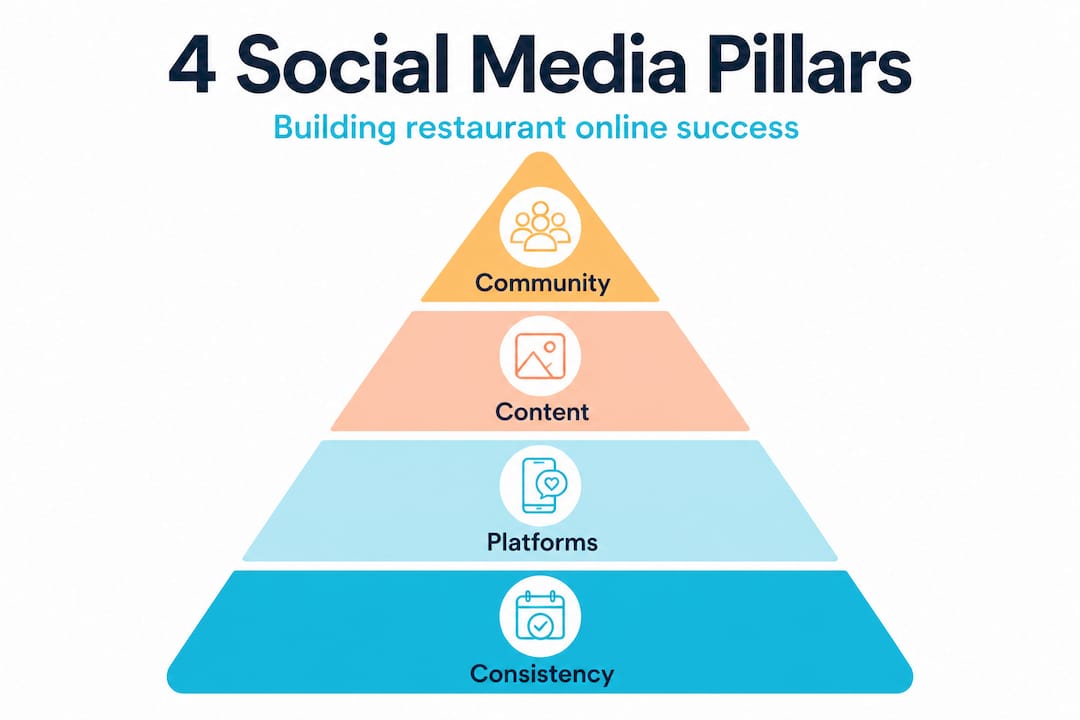
2. Content creation
Content is the engine. Short-form video consistently outperforms static images across every major platform right now. A 15-second clip of a sizzling steak being plated can generate thousands of views organically. Using restaurant hashtags that work correctly expands your reach beyond your current followers and puts your content in front of local diners who don’t know you yet.
3. Engagement and community building
Posting and disappearing is a strategy that fails almost every time. You need to respond to comments, answer DMs promptly, and like or reply when guests tag your restaurant. This interaction signals to the algorithm that your content is worth showing to more people. It also builds the kind of loyalty that turns first-time diners into regulars. Focused efforts on growing followers are worth the investment because every new follower is a potential guest.
4. Paid social advertising
Organic content builds your foundation. Paid ads accelerate results. Here’s a quick comparison to help you decide when to use each:
| Strategy | Best for | Budget needed | Timeline to results |
|---|---|---|---|
| Organic posting | Building trust, brand voice | Low to none | 2 to 6 months |
| Paid social ads | Driving event bookings, new reach | $300 to $1,500/month | 1 to 4 weeks |
| Boosted posts | Amplifying top-performing content | $20 to $200/post | Days |
Pro Tip: Schedule your content calendar around key moments: holidays, local sports events, graduation season, and the months when private event inquiries peak (October through December and late winter for Valentine’s Day). Planning ahead means you’re not scrambling to post at the last minute when the moment actually arrives.
Consistency and authenticity are what separate restaurants that grow on social media from those that stall. You don’t need Hollywood production value. A clean, well-lit photo taken on a smartphone and posted three to five times per week will outperform a restaurant that posts sporadically, even if those occasional posts look professional.
How social media marketing drives diners and private bookings
Understanding the mechanics is only half the battle. Let’s connect these pillars to real results, filling tables and event spaces.
Social media doesn’t just build awareness. It directly converts followers into paying guests. More bookings with social media engagement is a real outcome restaurants achieve when they treat social media as a sales channel, not just a content channel.
Here’s how the diner journey typically unfolds:
- Discovery → A potential guest sees a Reel of your private dining room set up for a birthday dinner. They save it.
- Research → They visit your profile, check reviews linked in your bio, and read your captions.
- Intent → They send a DM or click the link in your bio asking about availability for a group of 20.
- Booking → You respond quickly, share pricing and details, and close the booking.
Every step in that journey is influenced by your social media presence. Weak or outdated content kills momentum at step two. No link in bio kills it at step three. Slow responses kill it at step four.
Tactics that consistently drive results:
- Behind-the-scenes Stories: Show setup day for a private event, cake delivery, custom menus being printed. These posts generate curiosity and inquiries.
- Event promotion posts: Announce upcoming private events, holiday reservation windows, and limited seating availability. Scarcity is a powerful motivator.
- User-generated content: Repost guest photos from birthdays, anniversaries, and corporate dinners. Authentic social proof is your most convincing sales tool for attracting new customers who are considering booking your space.
| Tactic | Goal | Average engagement boost |
|---|---|---|
| Behind-the-scenes Stories | Build trust and curiosity | 25 to 40% more DMs |
| Private event showcases | Drive event inquiries | 35 to 50% more booking requests |
| Guest UGC reposts | Social proof and loyalty | 20 to 30% more profile visits |
| Paid event promotion ads | Targeted reach | 3x to 5x more event leads |
Pro Tip: Ask happy clients from private events to share a short testimonial in your Instagram Stories or as a Facebook review. Then feature those testimonials in your feed posts. Real guest voices convert far better than any branded marketing copy you’ll ever write.
Best practices and common mistakes in restaurant social media marketing
You’ve seen what success looks like. Now, let’s make sure you avoid common roadblocks and put proven tactics into action.
What works consistently:
- ✅ Responding to every comment and DM within a few hours
- ✅ Spotlighting real guests with permission (birthday parties, anniversaries, team dinners)
- ✅ Adapting quickly to trending audio on TikTok and Instagram Reels
- ✅ Using location tags and local hashtags on every post
- ✅ Mixing content types: video, photos, Stories, carousels, and polls
What kills your results:
- ❌ Ignoring comments or letting DMs sit unanswered for days
- ❌ Posting only promotional content without personality or story
- ❌ Going silent for weeks, then posting in bursts
- ❌ Never showing the people behind your restaurant
- ❌ Using the same caption format on every single post
These mistakes are more common than you’d think, even in well-run restaurants. Owners get busy, consistency slips, and suddenly the account looks abandoned. Potential guests notice. Potential event clients move on to a competitor whose Instagram looks active and inviting.
Quick best practices checklist:
- [ ] Post at least three to five times per week
- [ ] Include a call to action in every caption (“DM us to check availability,” “Click our bio link to book”)
- [ ] Use five to ten relevant hashtags per post
- [ ] Engage with local influencers and tag nearby businesses when relevant
- [ ] Review your top-performing posts monthly and do more of what’s working
You can find inspiration in proven campaign examples from restaurants that have already cracked the code. Study what they’re doing, adapt it for your brand, and execute consistently.
Building a strong brand awareness guide strategy alongside your social content ensures that guests recognize your restaurant before they ever walk in the door.
Pro Tip: Use Instagram DMs and Facebook Messenger as a direct sales channel for private events. When someone sends a message asking about your space, respond with a short, friendly message that includes your capacity, a starting price point, and a link to a booking form or your website. A fast, helpful reply closes bookings that might otherwise go elsewhere.
What most restaurant owners overlook about social media marketing
With strategies in your toolkit, it’s time for a clear-eyed look at what really drives results in restaurant social media marketing.
Here’s the honest truth: chasing viral moments is not a strategy. Every restaurant owner we talk to wants the video that gets a million views and floods the dining room for weeks. That does happen. But it almost never happens on purpose, and it’s not something you can build a business plan around.
What actually drives steady growth in bookings and event revenue is something far less glamorous: showing up consistently, engaging your local community, and building a feed that feels like a trusted neighbor rather than a billboard.
We’ve worked with restaurants that went all in on creating big, elaborate video productions once a month. They got some attention. But the restaurants that posted simple, authentic content three to five times per week, responded to every comment, and tagged local businesses and events in their area? Those restaurants saw compounding results month over month.
Here’s a realistic picture of what the journey looks like:
Month 1 to 2: Slow follower growth, low engagement. This is normal. You’re building a baseline. Stay consistent.
Month 3 to 4: Engagement starts to increase. DMs begin coming in. You start seeing local faces in your comments. Posts promoting your private event space generate inquiries.
Month 5 to 6: Bookings attributed to social media become measurable. Your profile starts showing up in local search results. Regulars begin tagging you in their own posts.
That’s a realistic arc. Not overnight, but absolutely achievable for any full service restaurant willing to commit. Many owners quit after month two because they expect the results of month six. That’s the biggest mistake we see.
Another thing most owners miss: monitoring online trends in your local market can give you a serious edge. When a food trend takes off in your city, being one of the first local restaurants to put your own spin on it earns you organic reach and media attention that no ad budget can buy.
Hyper-local targeting matters far more than broad viral appeal for full service restaurants. A post seen by 500 people within five miles of your location is worth more to your bottom line than a post seen by 50,000 people spread across the country. Your ads, your hashtags, your location tags, and your community engagement should all be focused on your actual trade area, not the entire internet.
Celebrate your regulars publicly. Feature your long-time staff. Share the story of how your restaurant got started. These human moments build a community around your brand that keeps guests coming back and referring their friends for private events. That’s where the real revenue lives.
How ION Hospitality can help your restaurant succeed on social media
Ready to take your restaurant’s social media presence and your event bookings to the next level?
Everything we’ve covered in this guide takes time, strategy, and consistent execution. We know you’re already running a full service restaurant. Your plate is full. That’s exactly why ION Hospitality exists.
We handle your social media advertising services from strategy to execution, including scroll-stopping content creation, targeted ad campaigns, and community management built around filling your tables and booking your private event spaces. Our approach is focused on generating real, measurable results, not vanity metrics. We’ve helped restaurants turn quiet event calendars into fully booked months using the exact tactics outlined in this guide.
Whether you need campaigns that get results or want to see how boosting bookings with engagement looks in practice, we’re ready to build a custom plan for your restaurant. Zero commissions. All done for you. Let’s talk.
Frequently asked questions
Which social media platforms work best for restaurants?
Instagram and Facebook are must-haves for most full service restaurants, while TikTok and X can offer meaningful extra reach depending on your target audience and dining experience.
How often should a restaurant post on social media?
Aim to post at least three to five times per week across your active platforms and make it a habit to respond to comments and DMs every single day for the strongest results.
Can social media help increase private event bookings?
Absolutely. Showcasing your event spaces with real guest photos, behind-the-scenes setup content, and testimonials directly encourages potential clients to inquire about booking your venue for their next event.
Do I need to pay for ads, or can organic social media marketing work?
A combination of consistent organic content and targeted paid advertising delivers the best return on investment. That said, restaurants that commit to organic posting alone can still see meaningful results, especially in the first few months.

Add a Comment