
TL;DR:
- Targeted hashtags connect your content to potential diners and drive real bookings.
- Use a mix of branded, local, trending, and campaign hashtags for best results.
- Regularly track and update your hashtag strategy to maximize restaurant growth.
You post a beautiful photo of your weekend special. The lighting is perfect, the food looks incredible, and then… crickets. Sound familiar? Most restaurant owners waste hours on social media because they chase the wrong hashtags. They copy what bigger accounts use, stack 30 generic tags on every post, and wonder why reservations aren’t climbing. The truth is, not all hashtags bring hungry customers to your door. Some just inflate your view count with zero real-world impact. This article breaks down exactly which hashtags work, why they work, and how to use them to fill more seats, generate more orders, and actually grow your business.
Table of Contents
- How hashtags work for restaurant marketing
- Top hashtag categories every restaurant should use
- The ultimate list: Best performing hashtags for restaurants in 2026
- How to measure success and refine your hashtag strategy
- Our take: Why most restaurants underperform on social media (and how to get real results with hashtags)
- Amplify your restaurant’s social media success with expert support
- Frequently asked questions
Key Takeaways
| Point | Details |
|---|---|
| Mix hashtag types | Combining branded, local, trending, and campaign hashtags maximizes restaurant visibility. |
| Use updated lists | Regularly refresh your hashtag strategy with high-performing options tailored for 2026. |
| Track and refine | Measure engagement and bookings to identify which hashtags actually drive new customers. |
| Quality over quantity | A focused set of relevant hashtags outperforms simply adding more tags. |
How hashtags work for restaurant marketing
Hashtags are more than a visual quirk at the end of a caption. They are a discovery tool. When someone searches #BrooklynBrunch or taps a trending food tag, your post can show up to people who have never heard of your restaurant. That’s the core mechanic: hashtags connect your content to people actively looking for what you offer.
Understanding the main types helps you pick the right tool for each goal:
- Branded hashtags (#TacoLocaEats): Unique to your restaurant. They build community and encourage guests to tag you in their own posts.
- Location-based hashtags (#ChicagoFoodie, #MiamiEats): Target people searching for dining options in your city or neighborhood.
- Trending hashtags (#TacoTuesday, #NationalPizzaDay): Ride seasonal or cultural waves to get in front of a broader audience fast.
- Campaign or event hashtags (#DateNightAtDinos, #HappyHourHunters): Drive buzz around a specific promotion, event, or limited-time offer.
Here’s a mindset shift most owners need: engagement and conversions are not the same thing. Likes and shares are great for brand awareness for restaurants, but the goal is to turn scrollers into diners. That only happens when you use hashtags that attract the right audience, not just a big one.
One of the biggest myths out there is that more hashtags equal more success. Instagram’s own data has shown diminishing returns when you pile on irrelevant tags. Quality beats quantity every time. Think five targeted, well-chosen hashtags over 30 generic ones. How hashtags boost visibility is tied directly to their relevance to both your content and your audience.
“Effective social media campaigns use targeted hashtags to drive real restaurant growth.” — 5 Proven Social Media Campaigns for Restaurant Growth
When you nail your hashtag categories, you stop hoping people stumble onto your page and start creating a system that brings your ideal customer directly to you.
Top hashtag categories every restaurant should use
Now that you know how hashtags work, let’s identify the most effective types that consistently deliver results for restaurants.
According to Restaurant Instagram marketing ideas, restaurants get more visibility using a mix of branded, local, and trending hashtags. Here are the four categories every owner should have in their toolkit, plus examples for each:
- Branded hashtags — Create one unique tag for your restaurant and push it hard. Print it on menus, mention it to guests, and use it on every post. Examples: #TheGoldenForkNYC, #SmokyBones_BBQ.
- Location-based hashtags — These target people searching for food near them. Examples: #ATLFoodie, #SeattleEats, #LARestaurants, #BostonDining, #DowntownDenverFood.
- Trending and seasonal hashtags — Jump on food holidays and cultural moments. Examples: #TacoTuesday, #NationalBurgerDay, #SundayBrunch, #WingWednesday, #FoodieFriday.
- Campaign and event hashtags — Built for a specific promotion or event. Examples: #Valentine’sDinnerAt[YourRestaurant], #KidsEatFreeMonday, #NewMenuDrop2026.
Use restaurant content creation tips to align your hashtag choices with the type of content you’re creating. A Reel showing your kitchen prep calls for different tags than a static post promoting a private event booking.
When to use each type matters as much as which ones you pick:
- Use branded on every post, no exceptions.
- Use location-based when promoting a dine-in experience or new menu.
- Use trending for quick visibility spikes during food holidays.
- Use campaign tags when pushing a specific offer, event, or seasonal promotion.
Pro Tip: Pair one high-volume tag (over 1M posts) with two to three mid-volume tags (100K to 500K posts) and one niche or branded tag per post. This mix pushes you into broader searches while keeping you discoverable in smaller, more targeted communities. Check hashtag strategy tips to fine-tune your approach based on platform algorithm updates.
The ultimate list: Best performing hashtags for restaurants in 2026
Let’s turn strategy into action by revealing this year’s top hashtags tailored for restaurant growth.
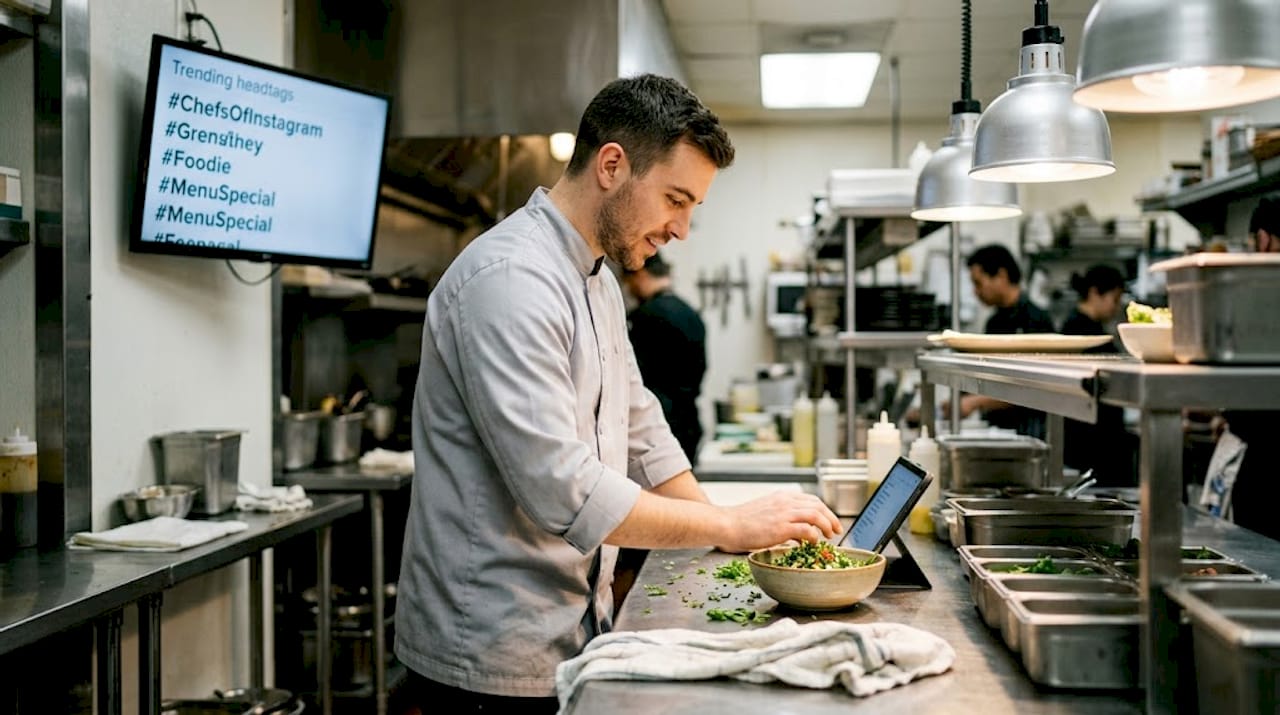
Monitoring online trends is essential because trending hashtags shift fast. What worked last year may be oversaturated now. Here are the top-performing hashtags broken out by category:
| Category | Top Hashtags | Best Use |
|---|---|---|
| General food | #Foodie, #FoodPhotography, #FoodLovers | Broad visibility |
| Local dining | #[CityName]Eats, #[CityName]Foodie, #EatLocal | Drive foot traffic |
| Cuisine type | #ItalianFood, #SushiLovers, #BBQNation | Niche audience targeting |
| Events/occasions | #HappyHour, #BrunchVibes, #DateNight | Promote specific visits |
| User-generated | #EatAt[YourName], #[YourName]Eats | Build community content |
| Promotions | #RestaurantDeals, #FoodSpecials, #LimitedTimeOffer | Push offers and bookings |
📌 Hashtags to use based on your goal:
- 🍽️ Drive bookings: #PrivateDining, #ReservationsOpen, #DateNightDinner, #GroupDining
- 📸 Generate user content: #FoodGram, #InstaFood, #ShareYourPlate, #FoodiesOfInstagram
- 🔥 Boost promotions: #RestaurantWeek, #HappyHourDeals, #WeeklySpecials, #TwoForOne
- 📍 Attract locals: #EatLocalFirst, #SupportLocal, #[Neighborhood]Restaurants
📊 Stat callout: Posts using location-specific hashtags see an average of 12% higher engagement compared to posts using only general food tags. That’s meaningful when you’re trying to turn online attention into in-person visits.
The goal isn’t to find the most popular hashtag. It’s to find the one that puts you in front of someone who’s hungry, nearby, and ready to book. That’s a very different target. Start with five to eight hashtags per post, focusing on a mix from this table, and track which ones move the needle.
How to measure success and refine your hashtag strategy
With the best tags in hand, ensure your efforts pay off by tracking and continually improving your hashtag approach.
As social media ads for bookings strategies improve, tracking social media analytics becomes essential for hashtag effectiveness. Here’s a step-by-step process to measure and improve your results:
- Use Instagram Insights — After posting, tap ‘View Insights’ on each post. Look for ‘Impressions from Hashtags.’ This tells you how many people found your content through the tags you used.
- Track Facebook post reach — Facebook’s Creator Studio shows reach breakdowns by content type. Watch for spikes tied to specific campaigns.
- Run A/B hashtag tests — Post two similar pieces of content using different hashtag sets. After seven days, compare impressions and engagement rates.
- Log your results — Keep a simple spreadsheet tracking which hashtag sets were used, total impressions, reach, and any bookings or messages that followed.
- Adjust every 60 to 90 days — Rotate out underperformers and test new combinations based on current trends.
| Tracking Method | Pros | Cons |
|---|---|---|
| Manual (spreadsheet) | Free, simple, fully customized | Time-consuming, human error risk |
| Instagram Insights | Built-in, real-time data | Limited to 7-day hashtag windows |
| Hootsuite / Later | Deep analytics, scheduling integration | Monthly cost |
Check Instagram hashtag analytics for a detailed breakdown of how to read your performance data the right way. You can also explore online presence strategies to connect your hashtag efforts to a broader digital marketing plan.
Pro Tip: Every time someone messages you or books after engaging with a post, ask them how they found you. Even one piece of that data per week helps you identify which hashtags are driving real revenue, not just impressions.
Our take: Why most restaurants underperform on social media (and how to get real results with hashtags)
After working with dozens of restaurant owners, the pattern is clear: most are measuring the wrong things. They celebrate when follower counts go up. They get discouraged when a post doesn’t go viral. But none of that matters if the tables are empty.
Hashtags are not a popularity contest. They are a targeting tool. The restaurant that uses #DowntownAustinDining and attracts 40 locals to a Friday night reservation is winning, even if that post got fewer likes than a national food blogger’s photo.
The uncomfortable truth is that vanity metrics feel good but they do not pay your food cost. What pays your food cost is a consistent system: the right hashtags, tested regularly, tied to specific measurable goals. Think bookings, online orders, private event inquiries.
We’ve seen restaurants attract new restaurant customers by simply switching from generic national tags to hyper-local, community-driven ones. The fastest wins come from testing, tracking, and repeating what works. Consistency always beats going viral once.
Amplify your restaurant’s social media success with expert support
Ready to take your restaurant’s online marketing to the next level? Hashtags are one piece of the puzzle, but a full strategy combines content, paid social media advertising for restaurants, community engagement, and data-driven refinement working together.
At ION Hospitality, we help restaurant owners build proven social media campaigns that go beyond hashtags to drive real bookings, grow private event sales, and generate consistent foot traffic. All done for you, with 0% commissions. If you’re ready to stop guessing and start growing, book a discovery call and let’s map out your strategy together.
Frequently asked questions
How many hashtags should I use on each post?
Most experts recommend using 5-10 relevant hashtags per post for optimal engagement and discoverability on platforms like Instagram. Quality and relevance matter far more than stacking up as many tags as possible.
Do local hashtags actually bring in more customers?
Yes. Location-based hashtags increase visibility to nearby users and are proven to drive more foot traffic. They connect your posts directly to people searching for dining options in your specific area.
How often should I change up my restaurant’s hashtags?
Refresh your hashtags every 2-3 months to stay current with trends. Regularly updating hashtags improves campaign performance and helps you discover which new tags are gaining traction with your audience.
Should I create my own branded hashtag?
Absolutely. Branded hashtags encourage guests to share their experience and build a library of user-generated content that acts as free social proof for your restaurant.

Add a Comment