

TL;DR:
- Effective SEO makes your restaurant visible when potential customers search online, increasing bookings and foot traffic. Consistently optimizing your Google profile, website content, reviews, and local keywords keeps your business competitive and attracts motivated diners. Ongoing SEO efforts are essential for long-term success and cannot be treated as a one-time task.
Your food is incredible. Your service is warm. Your dining room looks great. So why are seats sitting empty on a Tuesday night? The hard truth is that quality alone doesn’t fill tables anymore. Customers aren’t walking past your storefront and deciding to pop in. They’re grabbing their phone and searching for somewhere to eat before they leave the house. If your restaurant doesn’t show up in those results, you simply don’t exist to them. This guide breaks down exactly what SEO is, how it directly affects your bookings, and what you can do about it starting today.
Table of Contents
- What is SEO and how does it affect restaurants?
- The impact of SEO on restaurant visibility and bookings
- Core SEO strategies every restaurant should use
- Measuring restaurant SEO success: metrics that matter
- The real secret: restaurant SEO isn’t set-and-forget
- Tap restaurant SEO expertise to accelerate your growth
- Frequently asked questions
Key Takeaways
| Point | Details |
|---|---|
| SEO drives restaurant discovery | Strong SEO helps your restaurant appear in more customer searches, increasing visits and bookings. |
| Optimize for local reach | Focusing on local SEO connects you directly with hungry customers in your area. |
| Content and reviews boost ranking | Up-to-date menus, appealing photos, and positive reviews signal relevance to both search engines and customers. |
| Track and adapt for best results | Analyzing key SEO metrics lets you refine your strategy and stay ahead of competitors. |
| SEO requires ongoing effort | Maintaining visibility means regularly updating your website, business profiles, and responding to trends. |
What is SEO and how does it affect restaurants?
SEO stands for search engine optimization. In plain terms, it means making your restaurant more visible when people search online. Every time someone types “best tacos near me” or “romantic dinner spots in downtown Austin,” search engines like Google rank businesses based on how relevant, trustworthy, and complete their online presence is. SEO is what determines whether you show up at the top of that list or on page five where nobody looks.
For restaurants, this is especially critical. You’re not selling a product that ships nationwide. You’re selling an experience tied to a specific location. That means the people searching for you are already motivated, already hungry, and already close by. They just need to find you.
Think about it this way: A restaurant with mediocre food but a strong online presence will consistently outbook a restaurant with exceptional food and zero SEO. That’s not a knock on quality. It’s just the reality of how customers discover places to eat in 2026.
A solid restaurant online presence covers far more than just a website. It includes your Google Business Profile, your listings on Yelp and TripAdvisor, your social media pages, and every review ever posted about you. SEO ties all of these together, making sure the right information reaches the right people at exactly the right moment.
Here’s what SEO actually affects for your restaurant day to day:
- Search ranking: Whether you appear on the first page of results when someone nearby searches for your cuisine type
- Accuracy of your information: Whether your hours, phone number, and address are correct across every platform
- Menu visibility: Whether your dishes show up in searches for specific foods in your area
- Review presence: Whether your star rating and customer feedback are prominently displayed
- Photo display: Whether appealing images of your food and space appear in search results
- Event discovery: Whether your private dining options or seasonal events show up when someone searches for those services
Restaurants that ignore SEO aren’t just losing website traffic. They’re losing real customers to competitors who took the time to optimize.
The impact of SEO on restaurant visibility and bookings
With a clear sense of what SEO is, let’s look at just how powerful its effects can be on your bottom line.
When your restaurant ranks well in local search results, the impact is direct and measurable. Restaurant brand awareness grows because more people see your name, your photos, and your reviews before they ever step through your door. Trust builds before the first visit. And trust converts to reservations.
📊 Statistic callout: Local search drives 28% of nearby purchases within a day, and restaurant searches are among the highest-intent queries on the internet. People aren’t browsing. They’re deciding.
Let’s make this even more concrete. Compare two restaurants in the same neighborhood:
| Factor | Restaurant A (with SEO) | Restaurant B (without SEO) |
|---|---|---|
| Google ranking for “Italian restaurant near me” | Top 3 results | Page 3 or lower |
| Google Business Profile | Fully updated with photos, hours, menu | Incomplete or outdated |
| Monthly website visitors | 2,400+ | 300 or fewer |
| Online reviews | 180 reviews, 4.6 stars, owner responds | 22 reviews, no responses |
| Online reservations per month | 90 to 120 | 10 to 15 |
| Walk-in discovery from search | Frequent | Rare |
The difference isn’t about which restaurant is better. It’s about which one is easier to find. Restaurant A consistently brings in new customers because it shows up when and where people are looking. Restaurant B relies entirely on word of mouth, repeat visitors, and luck.
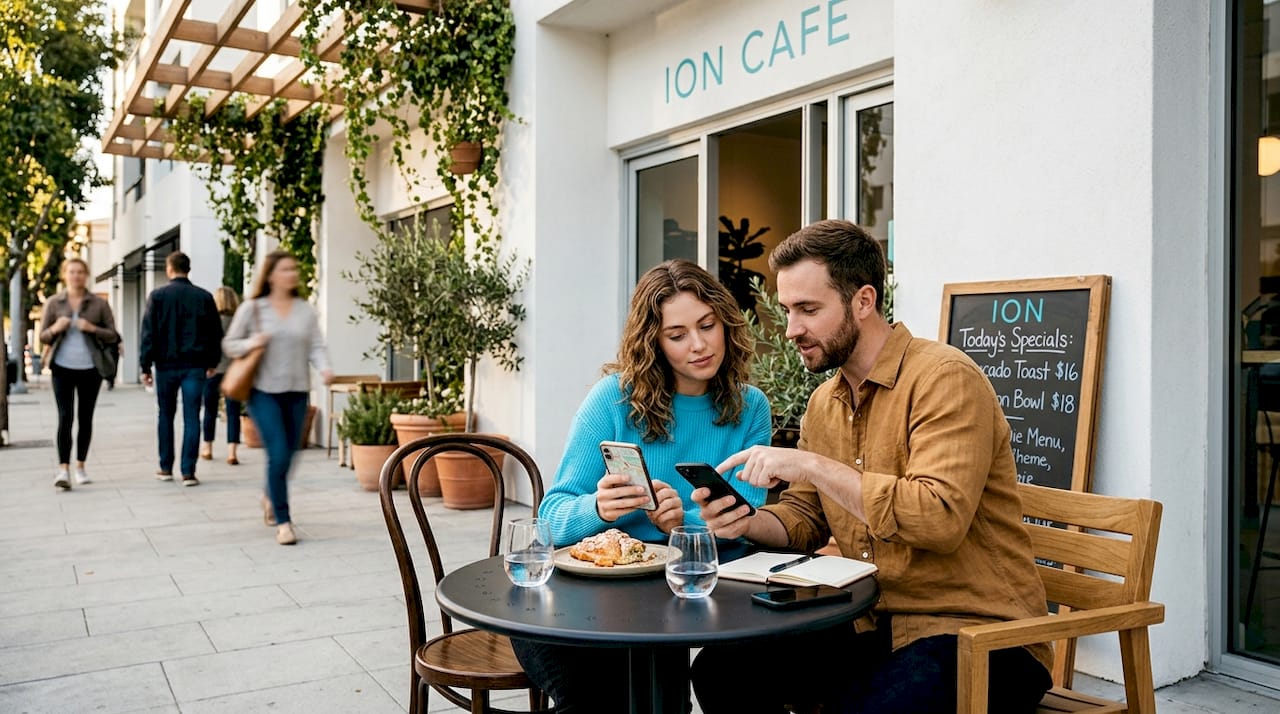
Staying current with marketing trends for restaurants means understanding that the search results page is your new front window. If it looks empty or outdated, customers keep scrolling.
The booking impact is real. Restaurants with optimized local SEO see higher reservation volumes because customers can find them, trust them based on reviews and photos, and take action instantly from their phone. That’s the power of showing up at the right moment.
Core SEO strategies every restaurant should use
Knowing the value of SEO, you’ll want practical steps for implementation. Here are the essential techniques to get started.
1. Optimize your Google Business Profile
This is your single most important SEO move. Your Google Business Profile (GBP) is what powers the map results, the knowledge panel, and the local search pack. Make sure every field is filled in: hours, address, phone number, website, cuisine type, and price range. Upload at least 20 high-quality photos. Add your menu directly to the profile. Post weekly updates about specials, events, or seasonal offerings. A fully optimized GBP can dramatically boost your visibility for free.
2. Build high-quality website content
Your website needs to do more than look pretty. It needs to tell Google exactly who you are and where you are. That means detailed menu pages with dish names and descriptions written out in full text (not just a PDF). It means an “About” page with your restaurant’s story, chef bios, and neighborhood context. It means a dedicated events or private dining page if you host those. Great restaurant content creation is what turns website visitors into paying customers.
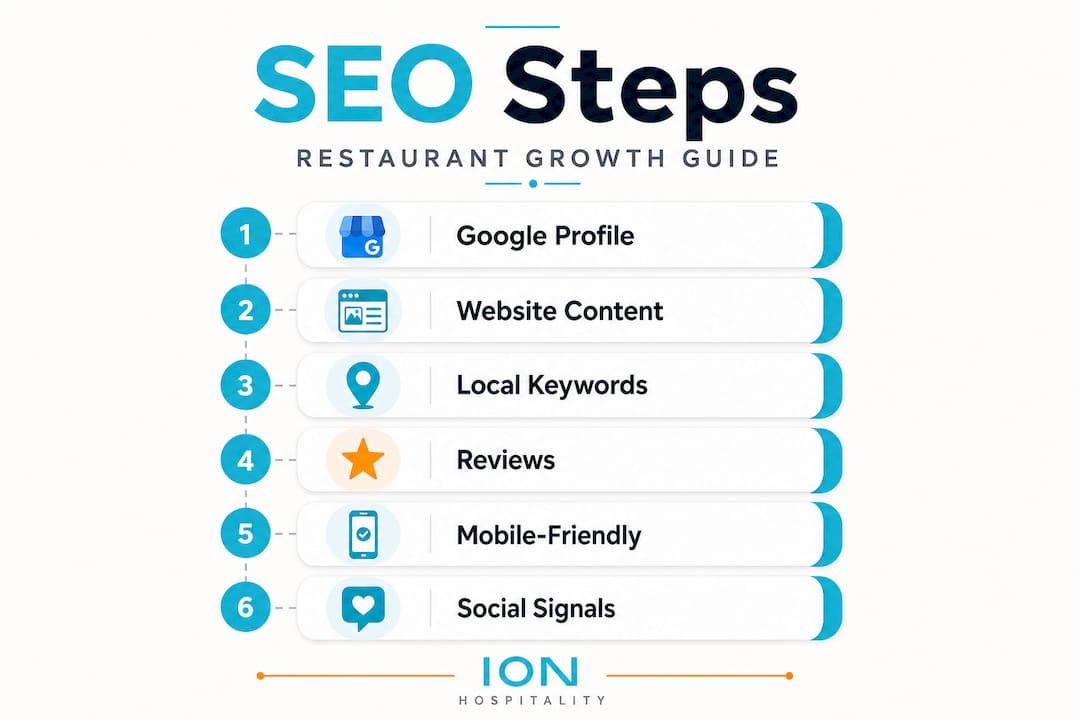
3. Focus on local keywords
Don’t just say you’re an “Italian restaurant.” Say you’re the “best wood-fired pasta in Capitol Hill, Seattle.” Include your city, neighborhood, and nearby landmarks naturally throughout your website copy. Write blog posts about local events, food festivals, or neighborhood guides. These signals tell Google your restaurant is relevant to specific local searches, which pushes you higher in results.
4. Encourage and respond to online reviews
Reviews are SEO fuel. The more positive, recent reviews you have on Google, Yelp, and TripAdvisor, the more authority your listing carries. Train your team to ask happy customers to leave a review. Send a follow-up email after reservations with a direct review link. And respond to every review, positive or negative, with a thoughtful reply. This signals to Google that your business is active and engaged.
5. Make your website mobile-friendly
Over 60% of restaurant searches happen on mobile devices. If your site loads slowly, displays poorly on a phone screen, or makes it hard to find your phone number or reservation link, you’re losing customers before they even consider visiting. Speed and simplicity are non-negotiable.
6. Leverage social media signals
While social media isn’t a direct SEO ranking factor, active Instagram restaurant marketing builds brand recognition that drives branded searches. When people see your food on Instagram and then search your restaurant name on Google, that branded search volume sends positive signals. Consistent use of restaurant hashtags also helps your social content appear in discovery searches within those platforms.
Pro Tip: Set up a simple monthly content calendar. Dedicate one day per month to updating your Google Business Profile, publishing a blog post, and replying to any unanswered reviews. This consistent rhythm compounds over time and keeps your SEO momentum strong without burning you out.
Measuring restaurant SEO success: metrics that matter
You’ve launched your SEO efforts. Now let’s make sure you’re seeing real, measurable improvement.
Too many restaurant owners set up SEO basics and never check back. That’s a missed opportunity. Tracking the right metrics tells you what’s working, what needs adjustment, and where your next win is coming from.
Here are the key metrics to watch every month:
- Organic website traffic: How many visitors arrived at your site through search results (not ads)?
- Google Business Profile views: How many times did your profile appear in search and maps?
- Direction requests: How many people clicked “Get Directions” from your Google listing?
- Phone calls from Google: How many calls came directly from your GBP listing?
- Online reservation volume: Are bookings through your website increasing month over month?
- Review count and rating: Is your review volume growing and is your average rating stable or improving?
- Keyword ranking changes: Are you moving up in search results for your target local terms?
Here’s a simple tracker you can use to spot trends:
| Metric | Month 1 | Month 2 | Month 3 | Goal |
|---|---|---|---|---|
| Organic website visitors | 310 | 480 | 650 | 1,000/month |
| GBP profile views | 1,200 | 1,750 | 2,400 | 3,000/month |
| Direction requests | 85 | 120 | 165 | 200/month |
| New Google reviews | 4 | 7 | 11 | 15/month |
| Online reservations | 14 | 22 | 38 | 60/month |
Tracking these numbers gives you a clear picture of momentum. If direction requests jump but reservations don’t follow, that might signal a friction point in your booking process. If your review count grows but your average rating dips, that’s a service or experience conversation worth having internally.
For tools, Google Analytics (free) and Google Search Console (also free) are your starting points. They show you which keywords people use to find your site, which pages they visit, and how long they stick around. Pair that with your GBP Insights dashboard and you have enough data to make smart, strategic decisions for attracting new customers without needing a data science degree.
Pro Tip: Set a recurring monthly calendar reminder labeled “SEO Review Day.” Spend 30 minutes looking at your core metrics, reply to any new reviews, and update at least one thing on your website or GBP. Small, consistent actions beat big occasional overhauls every time.
The real secret: restaurant SEO isn’t set-and-forget
Here’s where we push back against the most common mistake restaurant owners make with SEO. They claim their Google Business Profile, add some photos, sprinkle in a few keywords, and then move on. Six months later, they wonder why nothing changed. The issue isn’t that SEO doesn’t work. It’s that they treated it like a one-time task rather than an ongoing practice.
Think about your menu. You wouldn’t print it once and never update it regardless of what changes in your kitchen. SEO works the same way. Your competitors are constantly updating their content. Google’s algorithm shifts regularly. New restaurants open and compete for the same search terms you’re targeting. If you go quiet, you slip.
The restaurants that consistently win at local SEO are the ones that treat it like a weekly habit. They post updates on their GBP every week. They respond to every review within 48 hours. They refresh their website content seasonally to reflect new menu items, upcoming events, and holiday hours. They’re running proven social campaigns for restaurants that feed their overall digital visibility. They stay visible because they stay active.
Here’s the contrarian truth we’ve seen play out consistently: a restaurant with a 70% optimized SEO setup that’s updated weekly will outperform a restaurant with a perfect initial setup that’s been untouched for six months. Freshness matters enormously to search engines. Activity signals credibility.
The mental shift you need to make is this: SEO isn’t a project with a finish line. It’s a system. Once you build the system, the cost in time is surprisingly low. But you have to keep showing up.
Tap restaurant SEO expertise to accelerate your growth
Understanding the ongoing effort that SEO requires, working with experienced partners becomes both a time-saver and a growth accelerator.
You’re running a restaurant. Your energy goes into your food, your team, your guests. Learning and executing an entire SEO strategy on top of that is a lot to ask. That’s where working with specialists pays off fast.
At ION Hospitality, we help full-service restaurants get more customers, fill private events, and drive online orders without taking a single commission. Our team handles social media advertising for restaurants and builds the kind of digital presence that creates real, measurable results. We’ve seen firsthand how the right strategy turns a struggling Tuesday into a fully booked week. Our clients see what social media engagement results actually look like when done right. If you’re ready to stop guessing and start growing, schedule a discovery call and let’s build a plan tailored to your restaurant. 🚀
Frequently asked questions
What are the first steps for a restaurant starting with SEO?
Claim your Google Business Profile, update your website content with local keywords, and actively encourage happy customers to leave reviews. These three actions build the foundation everything else grows from.
How long does it take to see SEO results for a restaurant?
Most restaurants begin seeing noticeable improvements within three to six months of consistent effort. Local SEO tends to move faster than broader search optimization since the competition pool is smaller and more focused.
Why is local SEO especially critical for restaurants?
Restaurants serve a specific geographic area, so local SEO ensures you appear when nearby customers are actively searching for a place to eat. This directly drives foot traffic, reservations, and phone calls from people already motivated to visit.
Can my restaurant compete with big chains through SEO?
Absolutely. Independent restaurants often have an advantage in local SEO because Google favors relevance and proximity over brand size. A neighborhood bistro with consistent reviews, accurate listings, and strong local content can outrank a national chain for searches in that specific area.

Add a Comment