

TL;DR:
- Restaurant cause marketing partners restaurants with nonprofits to promote community involvement and fundraise effectively. Successful campaigns combine clear causes, multiple tactics, and digital amplification, fostering loyalty and trust. Small restaurants can succeed by authentic storytelling, local partnerships, and low-cost engagement strategies.
Restaurant cause marketing is defined as a partnership between a restaurant and a nonprofit or community cause, where both parties benefit through shared promotion, fundraising, and brand alignment. The best examples of restaurant cause marketing go far beyond writing a check. They combine menu innovation, digital amplification, and genuine community engagement to drive real results. Domino’s raised over $19 million for St. Jude Children’s Research Hospital in 2025. Chicken Salad Chick Foundation broke its own fundraising record. These are not flukes. They are the result of campaigns built with intention, and you can apply the same principles at your restaurant.
1. What are standout examples of restaurant cause marketing campaigns?
The most successful restaurant charity initiatives share three traits: a clear cause, a specific fundraising mechanic, and a story worth sharing. Here are the campaigns worth studying.
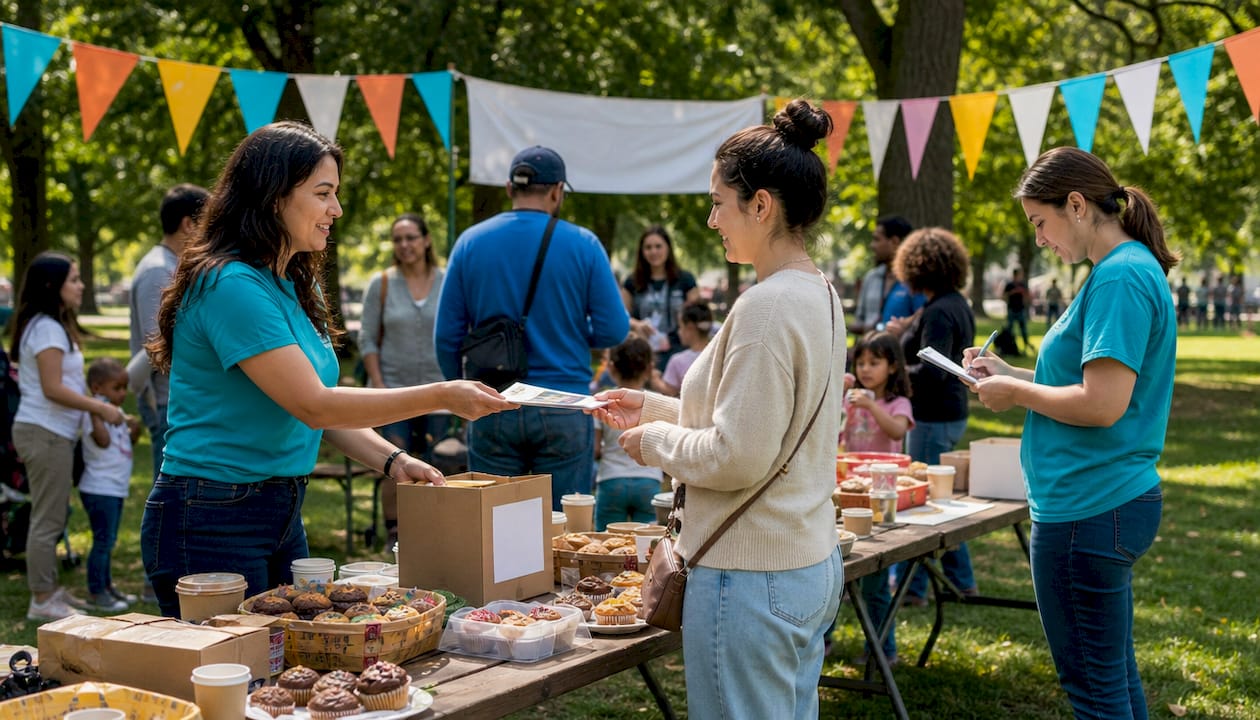
Domino’s and St. Jude Children’s Research Hospital
Domino’s ran a multi-tactic campaign in 2025 that raised over $19 million for St. Jude. The campaign used three distinct fundraising channels working at the same time.
- St. Jude Giving Combo and add-on donations: $10.5 million raised through menu-linked purchases
- Register round-ups: $8.6 million collected by asking customers to round up their total
- Team-member walk events: $511,000 raised through staff participation
That combination of customer-facing and employee-facing tactics is what pushed the total to a record level. No single tactic did it alone.
Chicken Salad Chick Foundation and CURE Childhood Cancer
Chicken Salad Chick ran a seasonal cookie sale paired with a Giving Card program. The result was a record-breaking $382,604 donation to CURE Childhood Cancer in 2025, surpassing the prior year by $50,000. The brand has now raised over $2 million for pediatric causes since 2017. The cookie sale gave customers a tangible, feel-good purchase. The Giving Card program extended participation beyond a single visit.
Just Salad and God’s Love We Deliver
Just Salad launched the Miso Mission Salad during National Nutrition Month in 2026. The brand donated 10% of proceeds from the limited-time item and encouraged register round-ups. The campaign supported God’s Love We Deliver, which provides medically tailored meals to over 20,000 clients. A limited-time menu item creates urgency. Tying it to a cause creates meaning.
2. How cause marketing builds community engagement and customer loyalty
Guests are no longer satisfied with points and punch cards. Loyalty is evolving from transactional perks to genuine community relationships, where guests feel like friends rather than transaction numbers. That shift changes everything about how you should think about your marketing.
Cause marketing fills the gap that discount-based programs cannot. When a guest knows that their meal contributed to a children’s cancer fund or fed a homebound neighbor, they feel something. That feeling drives repeat visits more reliably than a free appetizer ever will.
“Guests increasingly seek connection and a sense of belonging over transactional loyalty perks, making cause marketing a community-building tool that no points program can replicate.”
One of the most underrated tactics in community engagement in restaurants is assigning specific roles to staff. Chef Mawa McQueen at Crepe Therapy Café created a dedicated “Connector” role on the floor. That person’s job is to build relationships with guests, not just take orders. The result is a restaurant that functions as a genuine community hub.
Social media amplification multiplies the impact of every cause effort. A single Instagram Reel showing your team at a charity walk reaches hundreds of people who were not in the room. That reach builds brand awareness and trust at the same time.
Pro Tip: Train your staff to talk about your cause partnerships naturally, not as a sales script. Denver restaurants like Olivia and Dear Emilia embed sustainability into staff training so conversations feel authentic, not forced. Apply the same approach to your cause marketing.
3. Practical steps to design an effective cause marketing campaign
Choosing the right cause is the first decision, and it is the most important one. Selective, brand-aligned partnerships yield stronger community connections than scattershot charity requests. Pick one or two causes that genuinely connect to your brand identity and your neighborhood.
Once you have your cause, build a campaign with multiple touchpoints. Use your email list, your social channels, and your in-store signage together. A campaign that only lives on Instagram misses the guests who open every email you send.
The table below compares common cause marketing tactics by effort level and community impact.
| Tactic | Effort Level | Community Impact | Best For |
|---|---|---|---|
| Register round-ups | Low | Medium | All restaurant types |
| Limited-time cause menu item | Medium | High | Brands with strong food identity |
| Donation nights for local orgs | Low | Medium | Independent and neighborhood spots |
| Staff-led charity walk or event | Medium | High | Brands with engaged team culture |
| Social media cause storytelling | Medium | Very High | Restaurants with active online following |
| Giving Card or gift card program | Low | Medium | Chains and multi-location brands |
Dual-purpose fundraisers that combine a menu item with a donation mechanic consistently outperform single-tactic campaigns. Just Salad and Chicken Salad Chick both prove this point. The menu item drives awareness. The donation mechanic drives participation.
Marketing expert Matt Plapp warns against being a “MINO” (Member In Name Only) in your community. Using your digital assets to promote a cause creates far more community value than simply handing over a gift card. Your email list and social following are media channels. Use them like one.
You can also explore content marketing approaches that apply directly to cause-driven storytelling. The principles of visibility and trust-building translate well to restaurant social responsibility campaigns.
4. How smaller restaurants can succeed with cause marketing on a budget
Independent restaurants do not need a corporate budget to run impactful cause marketing campaigns. The most effective small-scale tactics rely on relationships and storytelling, not spending.
Here are the approaches that work best for independent and small-chain operators:
- Donation nights: Partner with a local school, sports team, or nonprofit. Pledge a percentage of that evening’s sales. Promote it on social media and ask the partner to do the same.
- Round-up at the register: Ask guests to round up their bill to the nearest dollar. The ask is small. The cumulative total surprises most operators.
- Cause-linked specials: Create a weekly or monthly special where a portion of proceeds goes to a local cause. Name the dish after the cause or the organization.
- Community storytelling content: Film a short video featuring the nonprofit you support. Post it as a Reel or Story. Let the cause speak for itself.
- Staff-led fundraisers: Give your team ownership of a cause. When staff are personally invested, they talk about it with guests naturally.
Amplifying local charity events through your owned media channels builds trust and authentic relationships with your community. You do not need a paid ad budget to do this. You need a phone, a story, and a platform.
Pro Tip: The most shareable cause marketing content is personal. Interview a guest whose life was touched by the cause you support. Post it. That single video will boost restaurant loyalty more than any discount campaign you run this year.
Key Takeaways
The most effective restaurant cause marketing campaigns combine a clear cause, a multi-tactic fundraising structure, and consistent digital amplification to build loyalty that outlasts any discount program.
| Point | Details |
|---|---|
| Multi-tactic campaigns win | Combine menu items, round-ups, and events to maximize fundraising and guest participation. |
| Cause alignment matters | Choose causes that connect to your brand identity and your neighborhood for lasting impact. |
| Digital amplification multiplies results | Use email, social media, and video to promote cause efforts beyond the four walls of your restaurant. |
| Staff engagement is a force multiplier | Train your team to discuss cause partnerships naturally so every guest interaction reinforces the message. |
| Small budgets can still deliver | Round-ups, donation nights, and storytelling content cost little but build deep community trust. |
Why cause marketing is the loyalty strategy most restaurants are sleeping on
I have worked with restaurant owners across the country, and the pattern is always the same. They pour money into discount promotions and loyalty apps, then wonder why guests stop coming back after the deal runs out. The problem is not the marketing budget. The problem is the strategy.
Cause marketing does something that a coupon never can. It gives guests a reason to feel proud of where they spend their money. That pride is sticky. It creates the kind of word-of-mouth that no paid ad can manufacture.
The restaurants I have seen do this best treat cause marketing as a year-round practice, not a one-off campaign. They pick a cause, build it into their brand story, and talk about it constantly. Their staff know it. Their social feeds reflect it. Their guests feel it.
The “Connector” model from Crepe Therapy Café is one of the most underrated ideas in the industry right now. Giving one person on your floor the explicit job of building community changes the entire energy of a restaurant. Pair that with a cause your team genuinely cares about, and you have something no competitor can copy.
My honest advice: stop treating cause marketing as a PR exercise. Treat it as the core of your community identity. The restaurants that do this consistently are the ones guests defend, recommend, and return to without needing a reason.
— Doug
Ionhospitality can help you turn cause marketing into real growth
Running a cause marketing campaign is one thing. Getting it in front of the right people is another.
Ionhospitality specializes in social media advertising for restaurants, and we know how to take your cause-driven story and turn it into scroll-stopping content that fills seats and builds your brand. We handle the creative, the targeting, and the execution so you can focus on running your restaurant. If you are ready to build a campaign that actually connects with your community, book a discovery call and let’s map it out together.
FAQ
What is restaurant cause marketing?
Restaurant cause marketing is a partnership between a restaurant and a nonprofit or community cause, where both parties promote each other and share fundraising results. It differs from simple charity donations because the restaurant actively integrates the cause into its marketing and operations.
How much can a restaurant raise through cause marketing?
Results vary widely by scale and tactic. Domino’s raised over $19 million for St. Jude in 2025 using a combination of menu items, register round-ups, and team-member walk events. Independent restaurants using donation nights and round-ups regularly raise thousands of dollars for local causes.
What causes work best for restaurant cause marketing?
Causes that connect to your brand identity and your local community produce the strongest results. Selective, brand-aligned partnerships consistently outperform generic or unrelated charity appeals in both guest participation and long-term loyalty.
How do small restaurants compete with chain-level cause campaigns?
Small restaurants win through authenticity and local relevance. Tactics like donation nights, register round-ups, and cause-linked specials require minimal budget. Amplifying these efforts through social media and email builds community trust that larger chains struggle to replicate at the neighborhood level.
How often should a restaurant run cause marketing campaigns?
Cause marketing works best as a continuous practice rather than a seasonal event. Restaurants that integrate cause partnerships into their year-round brand story see stronger loyalty and word-of-mouth than those that run one-off campaigns.

Add a Comment